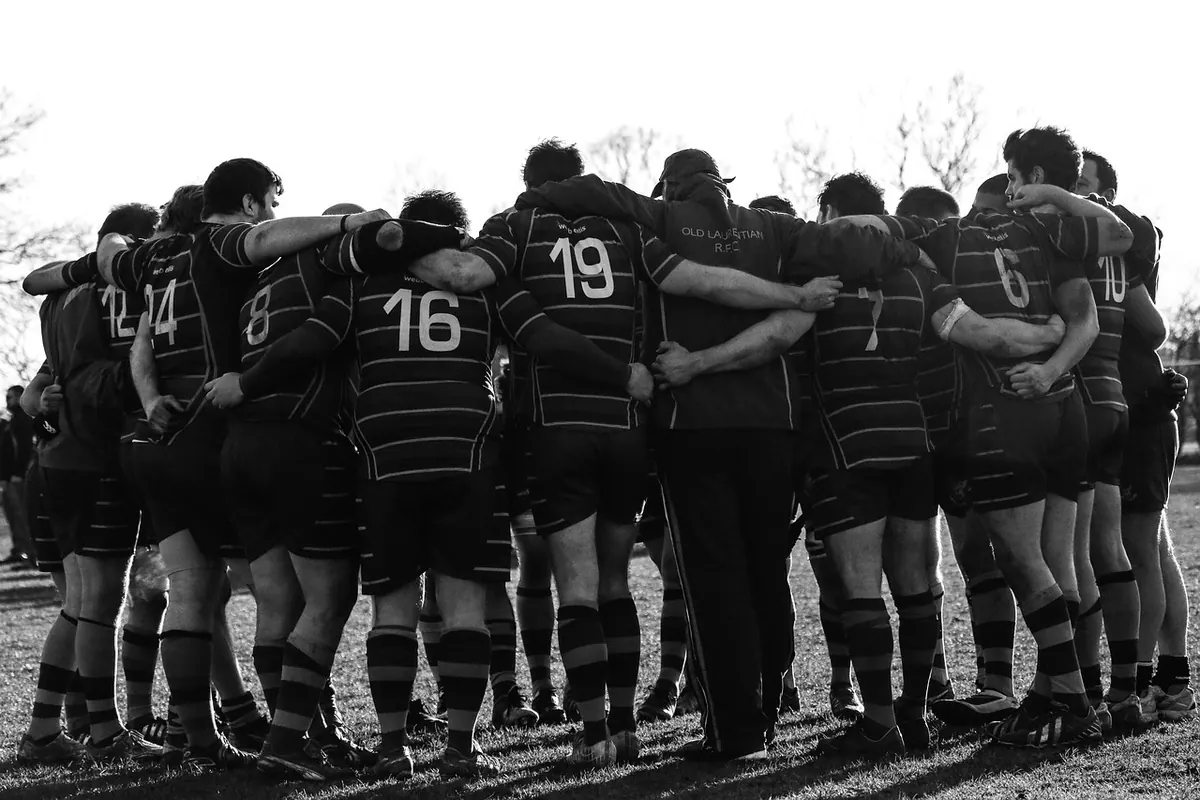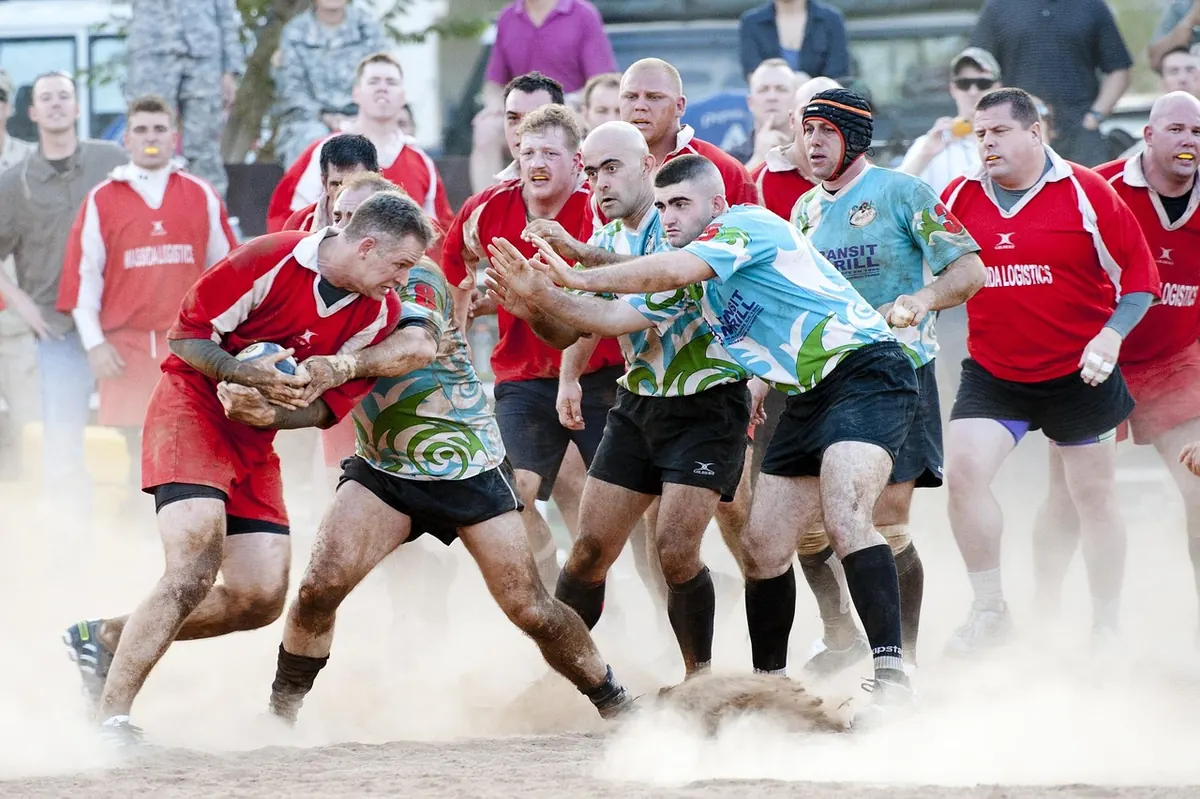
The first time you watch rugby, it looks like a controlled car crash with a whistle. Players pile into each other, the ball vanishes, and the crowd erupts at something you didn't see. Then somebody kicks the ball into touch and everyone claps. The good news is that rugby is a simple game buried under a lot of noise. Learn a handful of laws, know where the players stand, and the chaos turns into a story you can follow.
First, Work Out Which Rugby You're Watching
There are two main codes, and they only look alike from a distance. Rugby union has fifteen players a side and covers the Six Nations, the Rugby Championship, the World Cup, and most club competitions in Europe and South Africa. Rugby league has thirteen a side and covers the NRL, Super League, and State of Origin.
League stops after six tackles, uses a "play-the-ball" instead of a contest on the ground, and scores tries worth four points. Union, which this guide focuses on, contests the ball at the breakdown constantly. If you see two neat lines of forwards forming and someone throwing the ball in from the sideline, you're watching union.
The Shape of a Team
A union side splits into forwards and backs, numbered 1 to 15. Forwards do the heavy lifting; backs do the running and kicking. Understanding that split explains almost everything about how a team plays.
The Forwards (1–8)
Numbers 1, 2 and 3 are the front row: two props either side of the hooker. They scrum, lift in lineouts, and carry the ball into contact. Numbers 4 and 5 are the locks, usually the tallest players on the pitch. Numbers 6 and 7 are the flankers and number 8 is the number eight — the back row. Their job is to win the ball at scrums and lineouts, tackle everything that moves, and turn over possession at the breakdown.
The Backs (9–15)
Number 9, the scrum-half, feeds the scrum and passes the ball away from rucks. Number 10, the fly-half, is the playmaker: he decides whether to pass, kick or run, and usually takes the goal kicks. Numbers 12 and 13 are the centres, who carry hard and defend the middle. Numbers 11 and 14 are the wings, the fast finishers out wide. Number 15, the fullback, is the last line of defence and often the counter-attacking threat.
How Points Are Scored
Union scoring is easy to remember once you've seen it a few times.
- Try — 5 points. A player grounds the ball in the opposition's in-goal area, the patch of grass behind the try line. Grounding means pressing the ball down with a hand or arm.
- Conversion — 2 points. A place kick at goal taken from a spot in line with where the try was scored. This is why scorers fight to touch down close to the posts: it makes the kick easy.
- Penalty — 3 points. A kick at goal after the opposition breaks a law. Teams can also kick for touch or tap and run instead.
- Drop goal — 3 points. A player drops the ball and kicks it through the posts during open play. Rare, and usually decisive when it lands.
The Laws You'll Notice Most
You don't need the full rulebook. These are the ones that explain the stoppages.
- Forward pass. The ball is thrown towards the opposition's try line. Play stops and the other team gets a scrum.
- Knock-on. The ball travels forward off a hand or arm, usually a drop. Also a scrum.
- Offside. At a ruck or maul, players must stay behind the last foot of the pile. In open play, you cannot be in front of the ball. Offside gives away a penalty.
- The tackle. The tackler must release the ball carrier, the carrier must release the ball, and both must get back on their feet before competing. Players arriving must come through "the gate" — from behind the ball, not the side.
- Ruck and maul. A ruck is the contest on the ground when the ball is on the floor and players stay on their feet. A maul is when the ball carrier is held up and teammates bind around him. Both are how teams fight for a few metres.
- Advantage. The referee lets play run if the offended team gains from it. If nothing comes, he brings it back for the penalty.
- Cards. A yellow card means ten minutes in the sin bin. A red card ends the player's match. They follow dangerous play, not ordinary mistakes.
Set Pieces: Scrums and Lineouts
A scrum is eight forwards from each side binding together and pushing against each other while the scrum-half feeds the ball in. Nobody may push before the ball goes in. A lineout is a throw-in from touch, with jumpers lifted by teammates to catch the ball. The throw must be straight.
Set pieces look slow, but they matter. Winning a penalty at a scrum can be worth three points or fifty metres of territory, and a dominant pack can physically wear an opponent down over eighty minutes.
Five Things to Watch in Your First Match
- Watch the ball, not the pile. It tells you where the next action happens, and it usually squirts out faster than you expect.
- Follow one player for five minutes. Pick a flanker or a fullback and see what he does when the ball is elsewhere. You'll learn more about positioning that way.
- Learn two referee signals: arms out for advantage, and the whistle with a hand pointing one way for a penalty.
- Use the commentary for numbers. "Ten kicks to twelve" is genuinely useful information once you know who plays where.
- Take a breath at scrums and lineouts. They're your chance to check the score and the clock.
Watch One Full Match This Weekend
Pick a single match and watch it start to finish. Don't worry about the laws you still don't know — nobody learns them all at once, and even experienced supporters argue about decisions. Watch the first twenty minutes twice if you can: the second time, you'll see the shape of the defence, notice the wingers hanging back, and hear the crowd react before the pass arrives. That's the moment rugby stops being noise and starts being a game you can read. From there, you'll never watch a match the same way again.
Photo: Pablo Hsm / Pexels