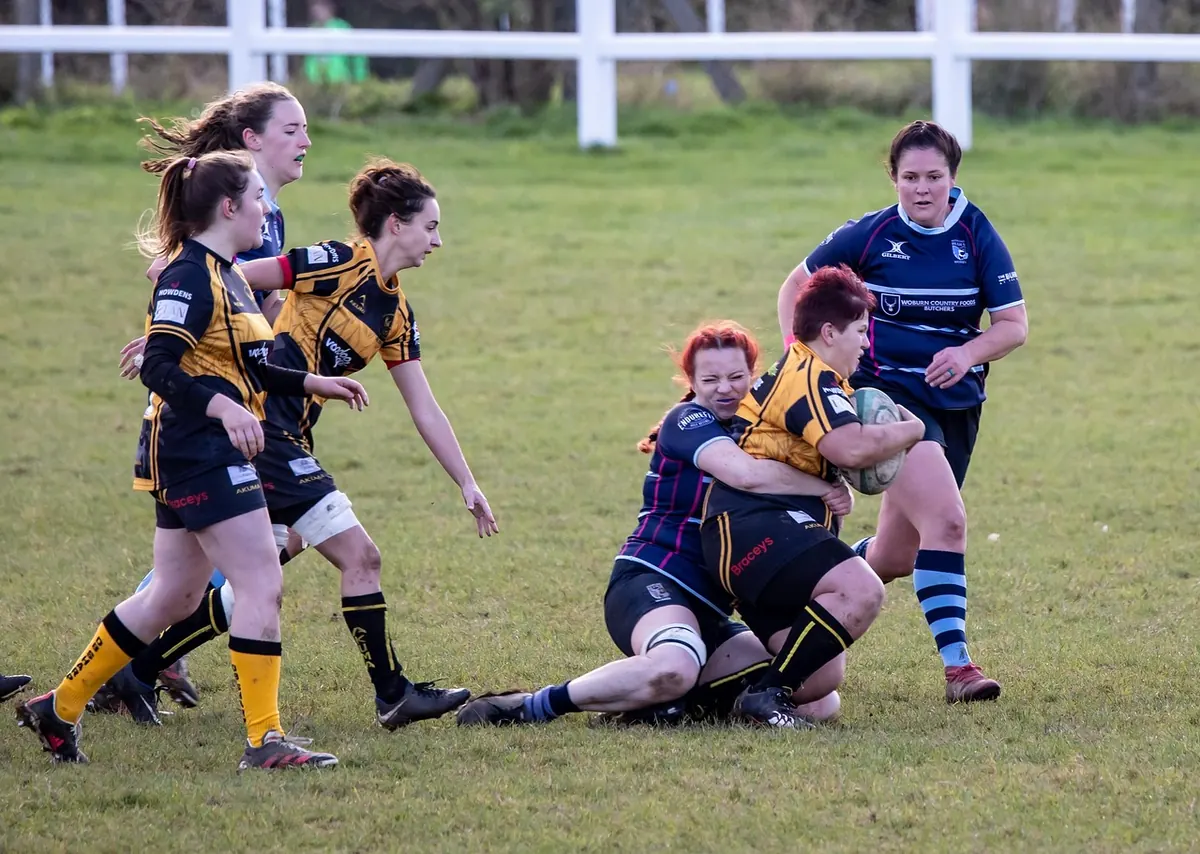
Every rugby player has a first season they would rather forget. Passes fly behind the receiver, tackles slide off, and there is a moment late in a match when you realise you have been standing in the wrong place for ten minutes. None of that means you cannot play. It means you are new. The mistakes below are the ones coaches point out every week, and each one has a fix you can practise on Tuesday and use on Saturday.
Passing: Get Your Hands Right Before You Worry About Distance
Most beginners throw the ball with their elbows pinned to their ribs and their palms facing the target. That push-pass travels slowly, floats, and too often lands at the receiver's feet. A good pass starts with the ball held in both hands, elbows slightly out, and a sweep across the body rather than a shove. Push off the back foot, rotate the hips, and let the hands finish pointing at the receiver's chest.
Three details clean up most passing problems:
- Square your shoulders. Forward passes at beginner level are rarely a hand problem. They happen because the passer is still running up the field when the ball leaves. Turn your shoulders to the target and release slightly behind your own running line.
- Aim at the chest, not the ankles. Pick a point just under the receiver's chin and follow through towards it.
- Slow down a step. A pass made at full pace with bad hands is worse than one made half a step slower with good hands.
The receiver has a job too. Put your hands up early as a target, watch the ball all the way in, and do not turn upfield before you have caught it. A dropped ball is usually a receiver who started running too soon.
Tackling: Low, Wrapped, Back on Your Feet
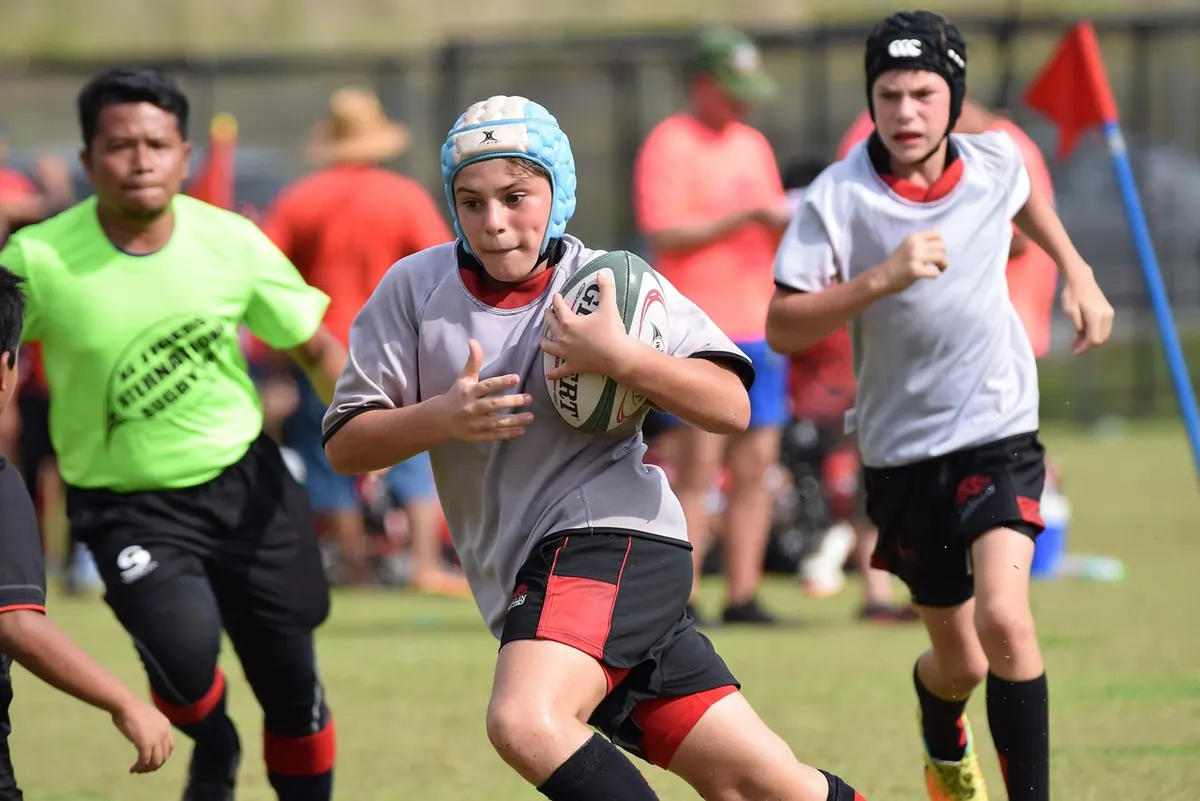
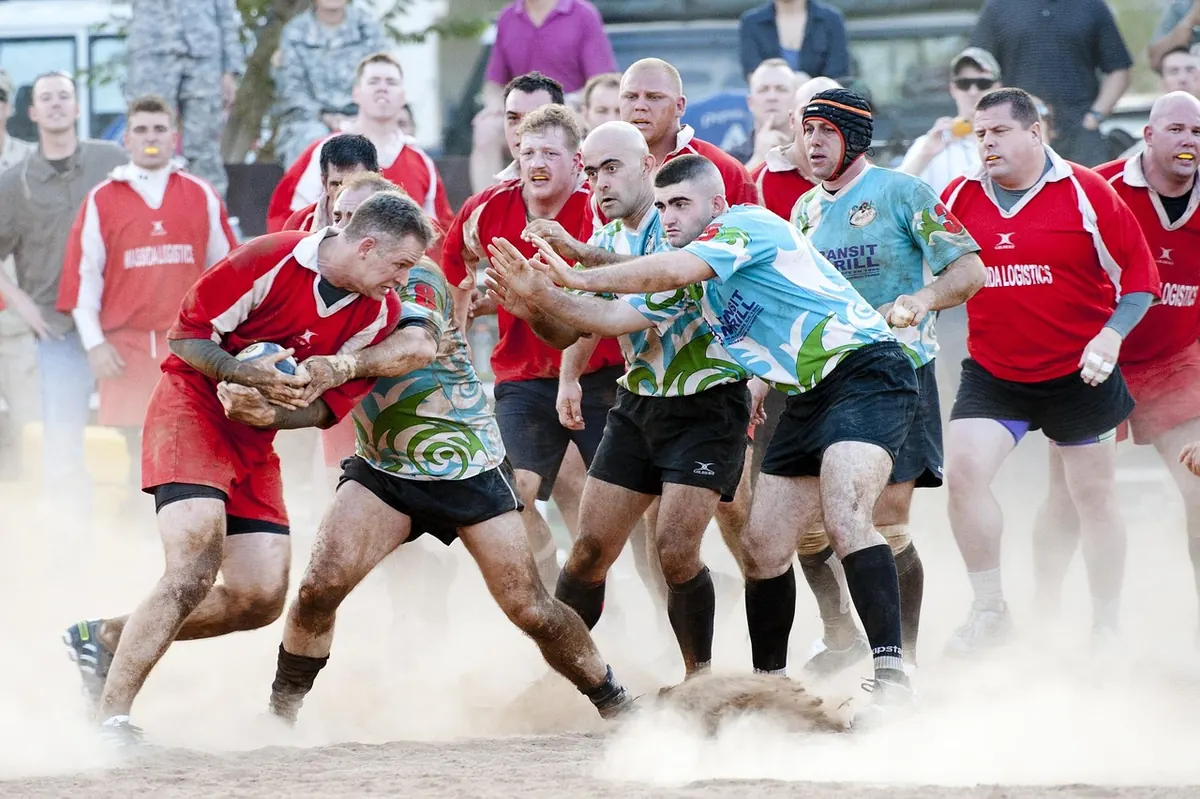
Beginners often close their eyes and lead with the head or shoulder while their arms trail behind. That is how you miss tackles and how you get hurt. The fix is a short last step so your foot lands close to the ball carrier, eyes open, head to one side, cheek against the ball or chest, shoulder into the waist or thigh. Then wrap the arms, squeeze, and drive with the legs.
Two habits cause most penalties at this level: tackling too high, grabbing at the shoulders, and tackling with no arms at all. Both are dangerous and both will be spotted. Finish the tackle on top, or roll away and get back to your feet so you do not concede a penalty for lying in the ruck.
Contact skills are best learned with a qualified coach on pads, not from a video or a friend's advice. If you take a knock to the head or neck, or feel dizzy or unwell afterwards, stop playing and get proper medical assessment before you return.
Positioning: Stop Watching the Ball
Ball-watching is the single most common beginner habit. The ball is a magnet, and when your eyes follow it, you drift, you get flat, and gaps open up.
In attack
Stand five to eight metres behind the passer instead of flat alongside them, so you can run onto the ball at pace rather than catching it standing still. Then hold a support line, usually at the inside shoulder of the ball carrier, and stay on it. If you are not a passing option, you are still a decoy, and a decoy who runs straight pulls defenders away.
In defence
Come forward together and trust the player inside you. Beginners drift out early, and the opposition simply passes behind them into the space they left. Watch the player in front of you, not the ball, until the tackle is nearly made, then react.
Know the offside line at every ruck and maul. Stay behind the last foot of your own players and keep checking as the ruck moves. Being a metre offside hands the opposition a penalty and ten metres of territory for nothing.
Decision-Making: Two Questions Before the Ball Arrives
Beginners usually catch the ball and then decide what to do, by which point they have been tackled. The trick is to ask two questions while the ball is still travelling: how much space is in front of me, and who is with me? The answers tell you whether to run, pass or kick.
Four errors follow from skipping those questions. Passing because you are nervous rather than because it is better. Passing to a teammate who is standing still and about to be smashed. Kicking without a chase, which simply hands over possession. And forcing an offload in contact when taking the tackle and presenting the ball would have kept your team on the front foot.
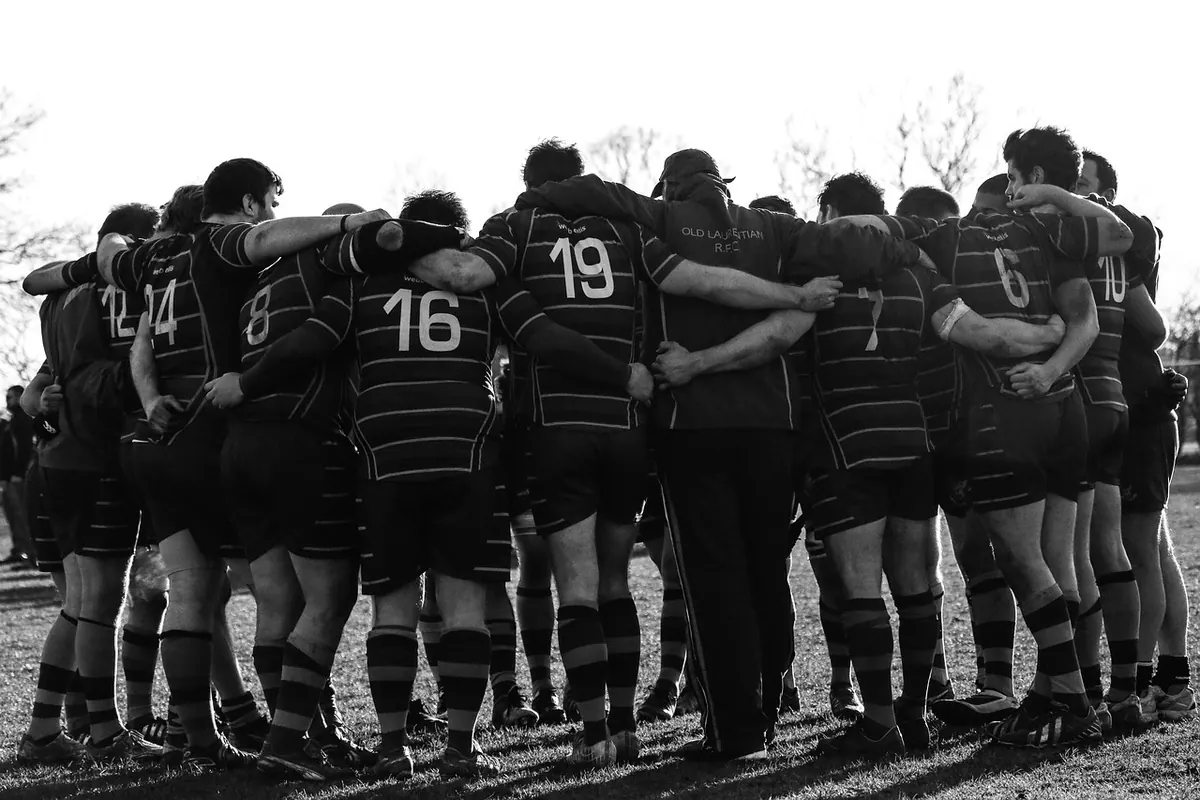
Talk early. Call "left", "right" and "up" before the moment, not after the whistle. A team that talks is a team that makes fewer panicked decisions.
How to Practise This, Not Just Read It
On your own
Find a wall and pass into it from three or four metres, catching the rebound. Fifty passes with your left hand, fifty with your right. Most beginners only ever practise their stronger side, then wonder why the pass breaks down when the play goes the other way.
In training
- Pick one thing per session. Tackle technique on Tuesday, passing under fatigue on Thursday. Trying to fix everything at once fixes nothing.
- Ask a coach or an experienced teammate to watch that one thing and give you one correction, not five.
- Do the basics at the end of training when you are tired, because that is when matches are decided.
- If your club films matches, watch yourself without the ball. It is uncomfortable and very useful.
Pick One Thing and Fix It This Week
Start with tackle technique and safety, because everything else depends on being able to make a tackle you can walk away from. Then work on catching and passing, since those two skills decide how much ball your team keeps. Positioning and offside discipline come next, and they cost nothing but attention. Decision-making improves last, and it improves fastest when the skills underneath it are already solid.
Pick one thing. Practise it until it feels boring. Then pick the next one. That is how the forgettable first season turns into a good second one.
Photo: TheOtherKev / Pixabay